
Table of Contents
Scrap Material Inspection Essentials in the UK
Scrap material inspection in the UK plays a vital role in regulating the export of recyclable goods, ensuring they meet stringent environmental and trade standards. This mandatory process verifies that consignments of metal and paper scrap are safe, free from hazardous materials, and compliant with international agreements. For exporters, it prevents costly disruptions and supports sustainable practices in global supply chains.
Post-Brexit, adherence to scrap metal export regulations UK has intensified, with the UK Government Guidance on Importing and Exporting Waste emphasizing notifications for waste shipments to non-EU destinations like Turkey and India, common hubs for metal recycling. Pre-shipment checks ensure compliance by identifying contaminants early, as outlined in the guidance’s sections on export controls. Melt Enterprise, a DGFT-approved Pre-Shipment Inspection Agency based in London, offers expert services including physical inspections and consultancy to help traders navigate these rules seamlessly.
Conducting thorough inspections yields clear benefits for exporters. Key advantages include:
- Reduced risk of shipment rejections at borders
- Enhanced buyer confidence through verified quality
- Streamlined banking processes with official documentation
The following table highlights the differences:
| Aspect | Without Inspection | With Pre-Shipment Inspection |
|---|---|---|
| Compliance Risk | High penalties and fines | Smooth customs clearance |
| Environmental Safety | Potential hazards released | Verified free from contaminants |
| Trade Efficiency | Delays and customs holds | Faster processing and approvals |
With a Pre-Shipment Inspection Certificate (PSIC), exporters secure essential documentation for customs and banking, as required under UK waste shipment rules. For instance, a London-based metal trader recently avoided delays exporting steel scrap to Asia by obtaining PSIC verification upfront. Similarly, paper scrap shipments to Europe benefit from UK scrap export verification, confirming no radioactive materials are present.
This guide explores fundamentals like pre-shipment inspection scrap metal protocols, certification processes, and regulatory nuances. From basic compliance steps to advanced consultancy, it equips you with knowledge to optimize exports. Understanding these essentials fosters efficient, responsible trade while minimizing risks in the evolving UK landscape.
Fundamentals of Pre-Shipment Inspections for Scrap
Pre-shipment inspections serve as the foundational quality gate for scrap material inspection in the UK, ensuring that exported consignments meet international standards before leaving the port. These inspections verify that scrap materials, such as metals and paper, are free from hazardous contaminants and comply with legal requirements. The primary objective is to prevent environmental risks and facilitate smooth global trade, protecting both exporters and importing countries from penalties or shipment rejections.
Under UK law, pre-shipment inspections are mandatory for certain waste exports, including scrap, to confirm compliance with environmental and safety regulations. The process aims to identify any issues early, reducing costs associated with non-compliant shipments. For instance, objectives include assessing material purity, checking for prohibited substances, and generating necessary certifications that support banking and customs clearance.
Physical inspections form the core of basic scrap verification processes, starting with a visual assessment of the consignment. Inspectors examine containers for obvious damage, contamination, or mixing of incompatible materials, such as spotting rust on metal scraps or foreign debris in a load. This stage is quick and helps flag surface-level problems without invasive measures.
Following visual checks, sampling occurs, particularly crucial for pre-shipment inspection scrap metal. Random samples are taken from various parts of the load to represent the entire consignment accurately. These samples undergo lab analysis to determine composition, moisture levels, and presence of hazardous elements like radioactivity or chemicals. For example, in a typical metal scrap container check, samples might reveal hidden alloys or residues that visual inspection misses, ensuring the scrap meets purity thresholds.
The physical inspection process can be compared across key types to highlight their roles in overall certification.
| Inspection Type | Visual Check | Sampling Analysis |
|---|---|---|
| Purpose | Surface hazards | Internal composition |
| Time Required | Quick | Lab-based |
| Cost Implications | Low | Moderate |
| Common Findings | Obvious contamination | Hidden metals |
These inspection types complement each other, with visual checks providing an initial filter and sampling offering deeper validation. According to UK Government Guidance on Importing and Exporting Waste, such methods ensure consignments are export-ready, minimizing rejection risks at destination ports. Interpreting results from both helps determine if the scrap passes for certification, guiding corrective actions if needed.
Documentation is equally vital, requiring exporters to prepare export notifications via the Environment Agency. Key steps include:
- Submitting a waste export notification form at least three months in advance.
- Obtaining consents from importing countries under Basel Convention rules.
- Applying for the Pre-Shipment Inspection Certificate (PSIC) post-inspection.
This entry-level export certification process ties physical findings to legal paperwork, ensuring traceability.
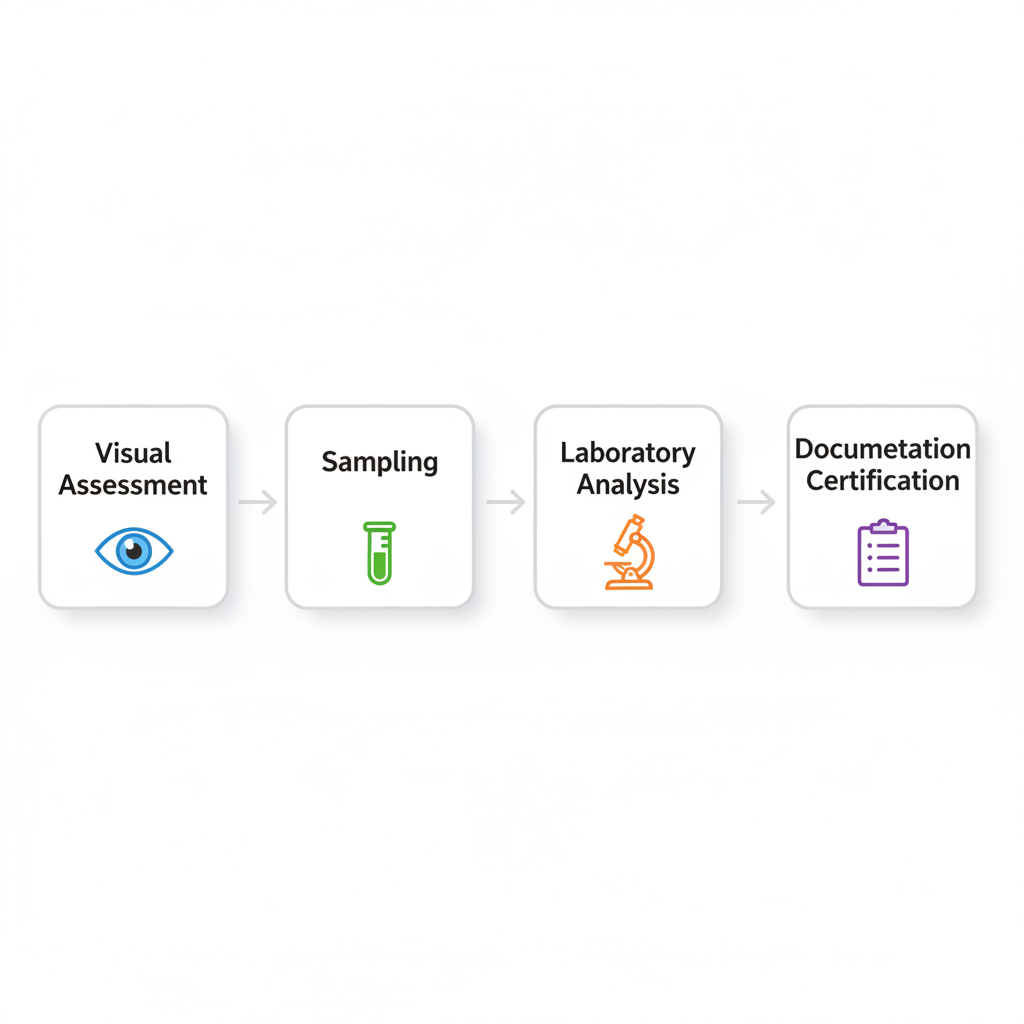
Four-stage process flow for pre-shipment scrap inspections in the UK
The diagram above outlines the sequential flow, emphasizing how each stage builds toward compliance. Timelines typically span 1-2 weeks for inspections, with costs starting at £500 for basic visual and sampling, varying by consignment size. Key players, such as PSIAs like Melt Enterprise, conduct these checks at loading ports, issuing PSICs to verify hazardous-free status.
Regulatory basics draw from scrap metal export regulations UK, aligned with the Basel Convention, which governs transboundary waste movements to prevent illegal dumping. Initial checks focus on non-hazardous classification, excluding items like radioactive scrap or chemical-soaked materials. Exporters must notify authorities and secure approvals, with non-compliance risking fines up to £50,000 or shipment seizures, as per government data on enforcement.
In-Depth Analysis of Scrap Inspection Processes
Scrap material inspection in the UK forms a critical layer of quality control for exporters, ensuring compliance with stringent environmental and trade standards. This analysis explores advanced protocols that safeguard against hazardous contaminants, streamline certification, and optimize logistics, empowering businesses to navigate complex export requirements effectively.
Detailed Hazardous Material Verification
Thorough waste verification protocols in the UK scrap inspection processes prioritize the identification of hazardous materials to prevent environmental risks during exports. Inspectors, often from approved Pre-Shipment Inspection Agencies (PSIAs) like Melt Enterprise, conduct on-site and laboratory assessments to detect contaminants such as radioactivity, heavy metals, and chemical residues in scrap consignments. For instance, X-ray fluorescence (XRF) analysis is employed for rapid screening of metals like lead and mercury in scrap metal, while gamma spectrometry measures radiation levels in potentially contaminated batches.
| Hazard Type | Detection Method | UK Threshold | Consequences if Exceeded |
|---|---|---|---|
| Radiation | Gamma Spectrometry | <0.5 Bq/g | Shipment rejection, environmental fines |
| Heavy Metals | XRF Analysis | <100 ppm (e.g., Pb) | Quarantine, remediation costs |
| PCBs/Chemicals | Gas Chromatography | <50 mg/kg | Export ban, legal penalties |
| Battery Acids | pH and Titration Tests | Neutral pH (6-8) | Hazardous waste reclassification |
| WEEE Contaminants | ICP-MS Spectrometry | <1% by weight | Delay in customs clearance |
Exceeding these limits can lead to shipment rejection, as seen in a 2022 case where a UK exporter faced a £50,000 fine after undetected mercury in aluminum scrap triggered alarms at Rotterdam port. Such incidents underscore the need for pre-shipment inspection scrap metal to verify compliance early, typically taking 2-5 days depending on consignment size, with lab costs ranging from £500 to £2,000 per batch. This verification not only mitigates risks but also builds trust with international buyers adhering to UK scrap metal export regulations.
Role of Certification in Export Compliance
Certification serves as the cornerstone of detailed export quality assurance, integrating seamlessly with UK customs procedures and global standards. Post-inspection, PSIAs issue the Pre-Shipment Inspection Certificate (PSIC), confirming that scrap is free from hazardous materials and meets Basel and OECD criteria. This document flows through a verification chain: initial lab reports feed into the PSIC, which accompanies the export notification submitted to the Environment Agency for approval before customs clearance.
Brexit has intensified these steps, requiring exporters to demonstrate equivalence to EU standards, as outlined in the Examples of Equivalent Environmental Standards for Packaging, Batteries and WEEE. For batteries, certifications must prove recycling sites abroad hold valid permits, such as China’s import licenses, to avoid blocks under UK waste shipment rules. Documentation must include stamped originals or translations, ensuring traceability from UK ports to destination facilities.
| Document | Purpose | Issuer | Validity |
|---|---|---|---|
| PSIC | Certifies hazard-free status | Approved PSIA (e.g., Melt Enterprise) | Per shipment, up to 1 year |
| Test Report | Provides lab results on contaminants | Accredited Laboratories | Ongoing, until superseded |
| Export Notification | Ensures regulatory compliance | Environment Agency | Per consignment |
Impact of Inspection on Trade Logistics
Thorough inspections significantly shape trade logistics for UK scrap exports, influencing timelines, costs, and port efficiency. At major hubs like Felixstowe or Liverpool, pre-shipment checks can extend loading by 1-3 days, adding £1,000-£5,000 in demurrage fees if contaminants are found, as per UK Government Guidance protocols.
Post-Brexit, enhanced verification has streamlined some digital notifications but increased physical sampling for high-risk WEEE and battery scrap, potentially delaying sailings by up to a week. A case in point: a 2023 consignment of copper scrap faced a 72-hour quarantine due to trace radiation, inflating logistics costs by 15% and disrupting supply chains to Asian markets.
Optimizing inspections through PSIAs like Melt Enterprise minimizes these impacts, enabling just-in-time shipping and reducing overall export timelines to 7-10 days. This balance ensures cost-effective operations while maintaining compliance, ultimately supporting sustainable UK scrap trade.
Practical Steps for Scrap Material Exports
Exporting scrap materials from the UK requires meticulous planning to meet international standards and avoid costly setbacks. This section outlines hands-on export verification processes, focusing on pre-shipment inspections to ensure compliance with environmental regulations. By following these practical certification workflows, exporters can streamline operations at UK ports and minimize risks associated with hazardous contaminants.
Preparing for Pre-Shipment Inspection
Scrap material inspection in the UK begins with thorough preparation to facilitate smooth pre-shipment checks at loading ports like Felixstowe or Southampton. Start by gathering essential documentation, including export licenses, waste classification forms, and evidence of equivalent environmental standards from the destination country. Engage a DGFT-approved Pre-Shipment Inspection Agency (PSIA) like Melt Enterprise to handle the on-site verification, ensuring your consignment aligns with global requirements.
| Preparation Item | Why Required | Potential Issue if Missed |
|---|---|---|
| Consignment Labeling | Identifies contents and origin for traceability | Delays in customs clearance due to misidentification |
| Sampling Access | Allows inspectors to collect representative samples | Incomplete verification leading to shipment rejection |
| Documentation Bundle | Proves compliance with waste shipment regulations | Fines or export bans from regulatory bodies |
| Site Segregation | Prevents mixing of hazardous and non-hazardous materials | Contamination risks triggering environmental penalties |
| Inspector Notification | Coordinates timing and personnel needs | Scheduling conflicts causing port delays |
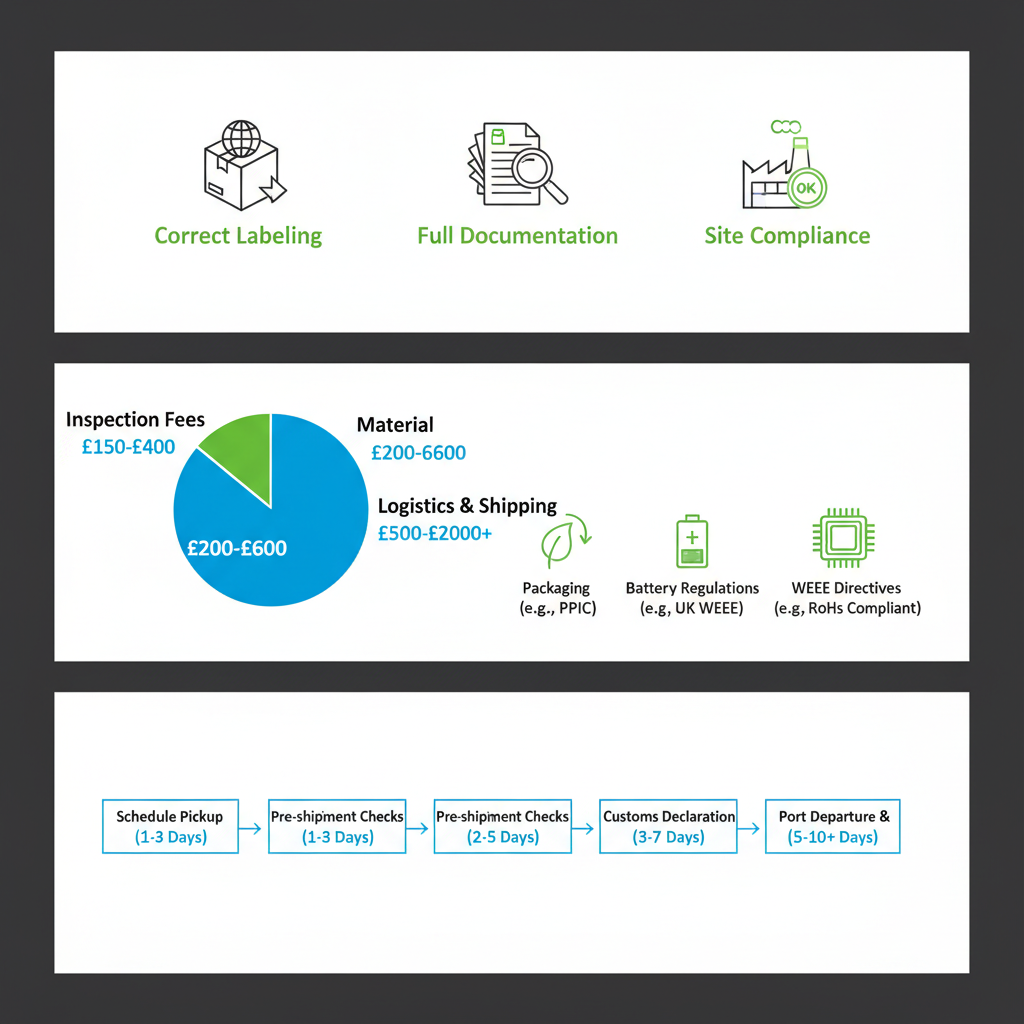
Practical steps infographic for scrap material exports from the UK
Navigating Costs and Timelines
Understanding costs and timelines is crucial for budgeting UK scrap exports effectively. Typical pre-shipment inspection scrap metal processes at ports involve fees structured around consignment size, material type, and testing complexity. Base inspection fees range from £500 to £1,500, covering physical checks and basic sampling by agencies like Melt Enterprise.
| Cost Factor | Typical Range (GBP) | Influencing Variables |
|---|---|---|
| Inspection Fee | 500-1,500 | Consignment volume and port location |
| Lab Testing | 200-800 | Scrap type (e.g., metals vs. electronics) and contaminant risks |
| Logistics Delays | 100-500 | Scheduling conflicts or weather at UK ports |
Post-Inspection Procedures and Compliance Checks
Once the inspection concludes, initiate post-inspection procedures promptly to secure clearance. The PSIA issues the Pre-Shipment Inspection Certificate (PSIC), detailing findings on quality and hazardous content absence. Submit this alongside waste shipment notifications to UK customs via the Environment Agency portal.
Verification involves cross-checking by authorities and buyers against scrap metal export regulations UK, including Basel Convention standards. Banks may require PSIC copies for letter of credit fulfillment. Address any discrepancies immediately, such as re-testing flagged samples, to prevent holds.
Advanced Compliance and Certification Strategies
Navigating advanced compliance in scrap material inspection in the UK requires a deep understanding of evolving regulations beyond basic protocols. Exporters must contend with sophisticated frameworks like OECD decisions on waste movements and bilateral agreements that govern transboundary shipments. These ensure that hazardous materials are minimized, aligning with international standards. Violations can lead to severe penalties, including fines up to £50,000 for non-compliance with notification requirements, as outlined in UK Government Guidance. For instance, if contamination exceeds permissible levels during pre-shipment inspection scrap metal, authorities may impose immediate shipment halts and criminal charges, escalating costs for repeat offenders.
Brexit has profoundly reshaped scrap metal export regulations in the UK, introducing independent controls outside EU frameworks. Previously integrated processes now demand enhanced scrutiny at borders, increasing the risk of delays for non-compliant consignments. The following table illustrates key shifts:
| Aspect | Pre-Brexit | Post-Brexit | Impact on Inspection |
|---|---|---|---|
| Notification Process | Simplified, EU-aligned | Stricter, national oversight | Requires detailed prior approvals |
| Border Checks | EU-aligned, minimal friction | Independent, rigorous scans | Heightens need for certification docs |
| Certification Rigor | Standard EU forms | Enhanced UK-specific audits | Demands thorough pre-shipment verifies |
Common Questions About UK Scrap Inspections
Do I need a Pre-Shipment Inspection Certificate (PSIC) for metal scrap exports from the UK? Yes, a PSIC verifies the consignment is free from hazardous materials, required under scrap metal export regulations UK for smooth customs clearance.
What does pre-shipment inspection scrap metal involve? It includes visual checks, sampling for contamination, and quality analysis at the loading port, ensuring compliance with UK standards.
How much does scrap material inspection in the UK cost? Fees vary by volume but typically range from £500-£1,500, depending on testing scope; Melt Enterprise offers competitive rates.
How long does an inspection take? Most complete within 1-2 days, allowing quick turnaround for shipments.
What documentation is required after pre-shipment inspection of scrap? The PSIC, plus test reports and exporter declarations, submitted to authorities for export approval.
How have Brexit changes affected scrap metal export regulations UK? Enhanced documentation for non-EU destinations, emphasizing equivalent environmental standards like those in India or Malaysia.
Do inspections check for hazardous materials? Absolutely; they identify contaminants per UK guidelines, backed by permits from destination countries’ environmental agencies.
Key Takeaways for Effective Scrap Exports
- Prioritize pre-shipment inspection scrap metal to detect hazardous materials early, safeguarding compliance and avoiding costly rejections.
- Master scrap metal export regulations in the UK to navigate certifications and documentation, facilitating smoother customs clearance.
- Leverage Pre-Shipment Inspection Certificates (PSIC) for enhanced trade credibility and expedited banking approvals.
- Embrace export compliance essentials that save time and reduce expenses through proactive quality testing and consultancy.
For certification summary insights and seamless UK exports, partner with trusted experts like Melt Enterprise, your go-to Pre-Shipment Inspection Agency (PSIA), to empower your operations today.