
Table of Contents
Understanding Pre-Shipment Inspections in the UK
Pre-shipment Inspection in the UK plays a vital role in ensuring compliance for scrap exports, especially for metal and paper materials. Based in London, Melt Enterprise Ltd, a DGFT-approved Pre-Shipment Inspection Agency (PSIA), conducts thorough checks at loading ports to verify consignments meet international standards.
A pre-shipment inspection serves as a mandatory verification process for scrap shipments, confirming they are free from hazardous materials as required under UK export regulations. According to the UK Government Guidance on Importing and Exporting Waste, exporters must adhere to strict controls on waste trade, including bans on certain hazardous substances to prevent environmental risks. This includes obtaining a pre-shipment inspection certificate UK, which supports banking certification and minimizes shipment rejections. Melt Enterprise offers pre-shipment inspection services UK, encompassing physical inspections, quality testing, and PSIC issuance, ensuring UK export verification for scrap aligns with global protocols.
These compliance checks for UK traders facilitate smooth international trade. Subsequent sections explore detailed regulations, Melt Enterprise’s specialized services, and practical steps for arranging inspections for metal scrap exports.
Overview of Scrap Export Regulations in the UK
The United Kingdom adheres strictly to international treaties such as the Basel Convention, which governs the transboundary movement of waste, including scrap materials. For exports of metal and paper scrap, Pre-shipment Inspection in the UK plays a crucial role in ensuring compliance and preventing environmental risks. Exporters must notify the Environment Agency in advance, classifying shipments under Annex IX categories like B3011 for metals and B3021 for paper to obtain necessary approvals. These export inspection protocols in the UK focus on verifying that consignments meet non-hazardous standards, avoiding trade disruptions from incomplete documentation.
Metal scrap exports, particularly non-ferrous types, fall under Basel Convention Annex IX (B3011) and require rigorous UK scrap compliance verification for radioactive contamination and heavy metals. Paper scrap, governed by Annex IX (B3021), faces checks for chemical residues, inks, and pastes that exceed thresholds, prohibiting such materials. Hazardous prohibitions trigger mandatory testing protocols, with common pitfalls like unverified shipments leading to delays, as seen in hypothetical cases where a metal consignment from London was held at port due to overlooked contamination risks. A pre-shipment inspection certificate UK is essential, detailing findings on quality and safety, and is mandatory for all regulated exports to confirm adherence to UK waste shipment rules.
Key differences in handling metal and paper scrap arise from their distinct risk profiles, such as metals’ potential for toxic leaching versus paper’s chemical additives. This necessitates tailored approaches in regulatory oversight.
| Aspect | Metal Scrap | Paper Scrap |
|---|---|---|
| Primary Regulation | Basel Convention Annex IX (B3011) | Basel Convention Annex IX (B3021) |
| Hazardous Material Checks | Radioactive contamination, heavy metals | Chemical residues, inks/pastes |
| Inspection Requirement | Mandatory PSIC for all consignments | PSIC required for non-hazardous but verified shipments over specified volumes |
These variations influence exporter strategies, with metal shipments demanding universal inspections to mitigate broader environmental threats, while paper requires volume-based scrutiny per UK Government Guidance on Importing and Exporting Waste. Data sourced from this guidance underscores accurate compliance details for waste classification and prohibited materials.
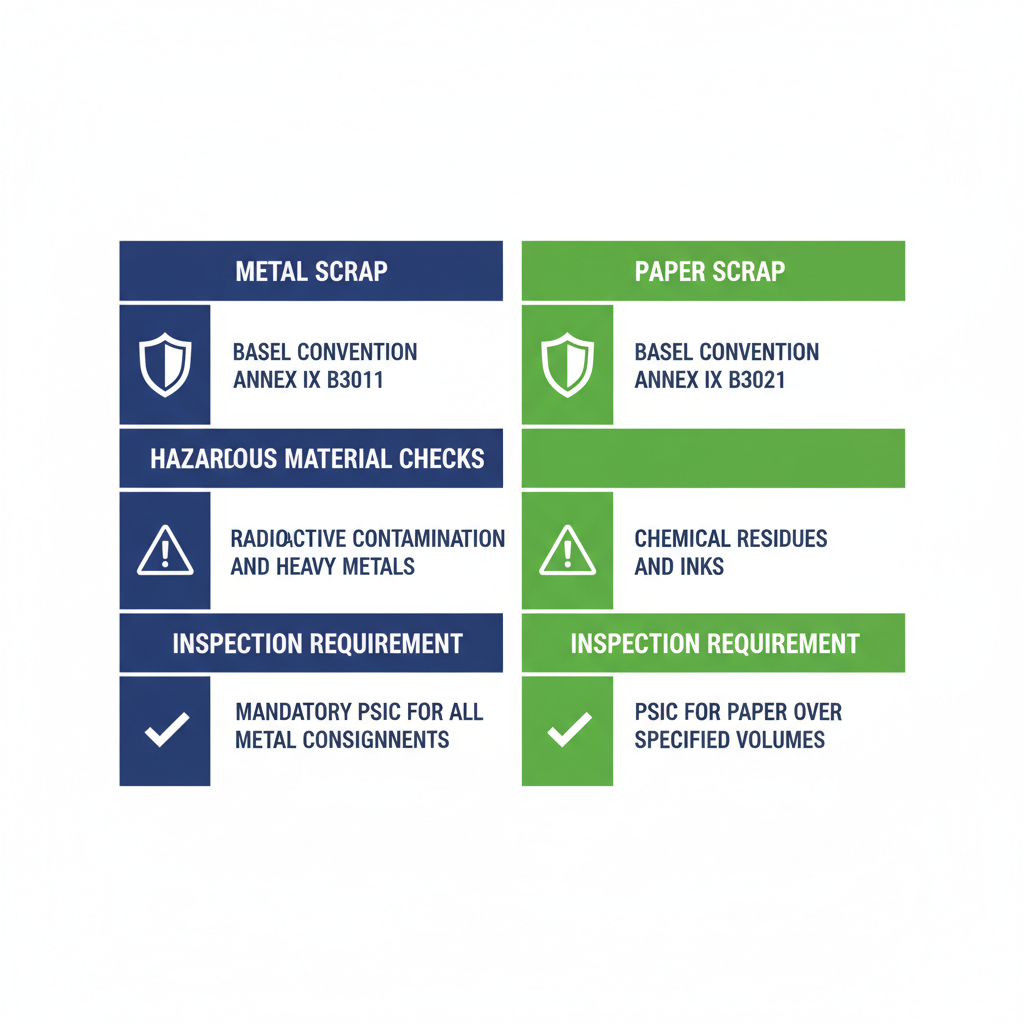
Comparison of UK regulations for metal and paper scrap exports
This visual summary reinforces how tailored compliance verification protects exporters from penalties and enhances trade efficiency.
Pre-Shipment Inspection Service Availability in the UK
Pre-shipment Inspection in the UK plays a crucial role for scrap exporters ensuring compliance with international trade regulations before cargo shipment. UK-based export verification services help mitigate risks by verifying scrap quality and safety at loading ports. Accredited scrap inspection providers in the UK, such as DGFT-approved agencies, conduct thorough assessments for metal and paper scrap, aligning with UK Government Guidance on importing and exporting waste to maintain reliable export processes.
When selecting pre-shipment inspection services UK, exporters can choose from established providers like Melt Enterprise, a DGFT-approved Pre-Shipment Inspection Agency based in London at 20-22 Wenlock Road, N1 7GU. Key services include visual checks for contamination, representative sampling, and lab testing for hazardous materials, ensuring consignments meet global standards. Melt Enterprise offers a comprehensive portfolio: physical inspections, quality analysis, regulatory certifications, and consultancy for logistics and banking needs. Turnaround times typically range from 24 to 48 hours, integrating seamlessly with export documentation for efficient clearance. Other accredited providers follow similar protocols, emphasizing compliance with waste export approvals as outlined in government guidelines.
Availability extends to major UK ports, including London Gateway and Felixstowe, where on-site inspections facilitate smooth operations for scrap shipments to global trade routes. Services at these hubs support exporters in regions like the Southeast, reducing delays through localized expertise.
Local Considerations for UK Scrap Exports
Exporting scrap from the UK requires navigating unique local factors to ensure compliance and efficiency in pre-shipment inspections. Regional variations in port protocols and environmental regulations play a key role, particularly in high-volume areas like London and the Southeast. These elements directly influence the preparation of metal and paper scrap shipments, emphasizing the need for tailored approaches to meet international standards.
Major ports such as Southampton impose stricter checks on waste movements, aligning with UK Government Guidance post-Brexit, which mandates notifications for non-hazardous scrap exports to EU and beyond. In the Thames region, logistical challenges from tidal schedules and urban congestion can extend timelines for pre-shipment inspections, often taking 2-5 days depending on vessel availability. Regional waste collection variances affect scrap quality, with stricter sorting in industrial Southeast hubs versus variable urban streams in London. Seasonal weather, like winter fog or summer heat, may delay loading, while Brexit customs shifts demand enhanced documentation for seamless border clearance. Pre-shipment Inspection in the UK incorporates these regional UK export checks, verifying material purity against local compliance for UK scrap trade.
A pre-shipment inspection certificate UK confirms adherence to these protocols, detailing quality assays and hazard-free status essential for banking approvals. From its London base, Melt Enterprise leverages local expertise in pre-shipment inspection services UK to coordinate with customs authorities and financial institutions, ensuring rapid response and minimal disruptions.
- Review port-specific guidelines early to anticipate delays.
- Factor in weather for scheduling inspections.
To proceed effectively, exporters should consult specialists for personalized regional strategies.
Getting Started with Pre-Shipment Inspections in the UK
Initiating Pre-shipment Inspection in the UK for scrap exports starts with clear steps to ensure compliance and smooth operations. As a first-time exporter of metal or paper scrap, notify the Environment Agency early via their online portal to submit your export notification, as outlined in UK government guidelines. This foundational action sets the stage for starting export inspections in the UK.
Follow these numbered steps for detailed process:
- Select a reputable PSIA, such as those offering pre-shipment inspection services UK, to handle verifications at UK ports.
- Schedule the inspection at the loading port, coordinating timelines with freight operators to align with your shipment departure–typically 7-14 days prior for efficiency.
- Prepare essential documentation, including the export notification form, scrap composition reports, and details for obtaining a pre-shipment inspection certificate UK. Budget for costs around £500-£1,500 depending on consignment size, with inspections usually completed within 24-48 hours.
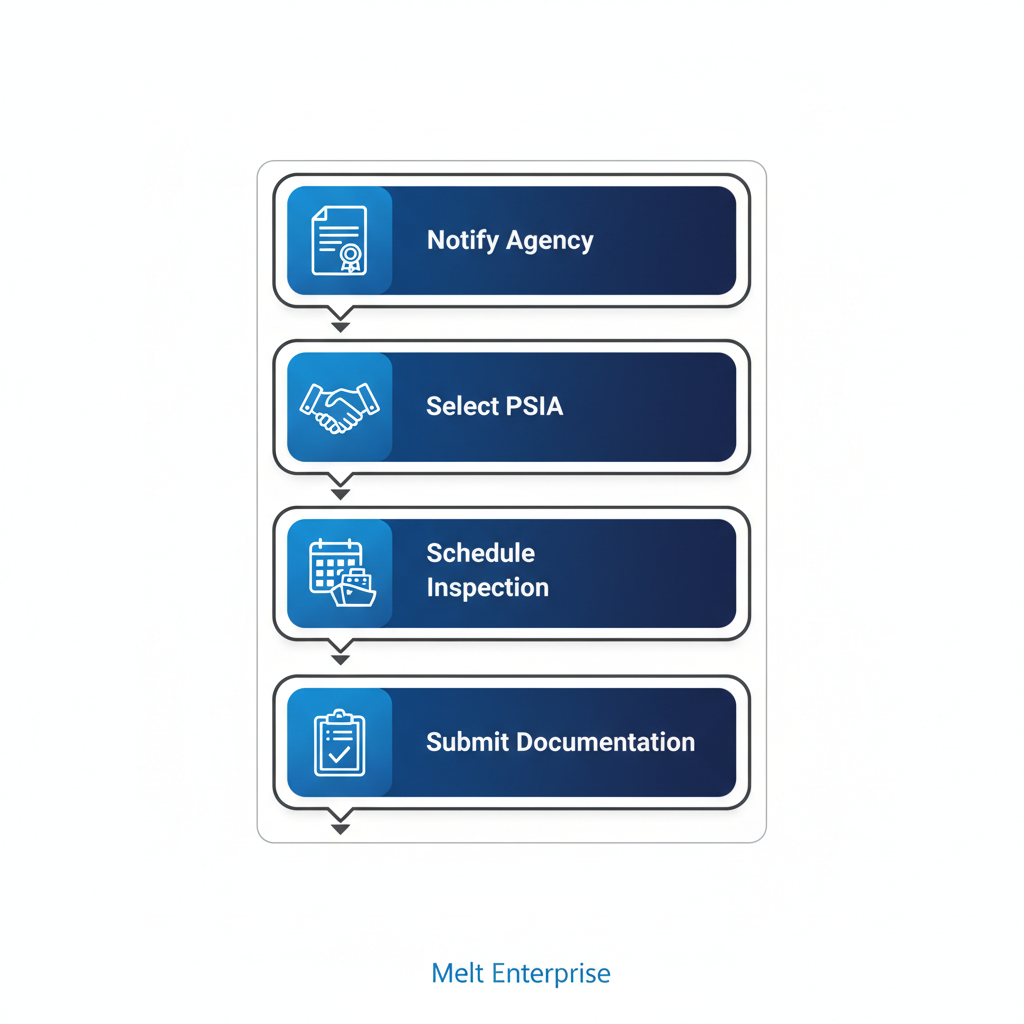
Step-by-step guide to initiating pre-shipment inspections for UK exports
For seamless integration, engage Melt Enterprise’s consultancy expertise early to avoid delays–contact them at their London office for tailored support. First-time exporters benefit from booking inspections well in advance.
Key Takeaways for UK Scrap Export Compliance
Pre-shipment inspections play a pivotal role in ensuring UK scrap exports meet stringent regulatory standards, as outlined in the UK Government Guidance on Importing and Exporting Waste. Obtaining a pre-shipment inspection certificate UK verifies consignments are free from hazardous materials, mitigating risks and facilitating smooth customs clearance. Essential UK export verifications address local factors like Basel Convention compliance, while pre-shipment inspection services UK provide comprehensive quality testing and certification.
Melt Enterprise, as a trusted DGFT-approved partner, offers compliance solutions for UK scrap through expert inspections that enhance trade reliability and support banking documentation. These services prove cost-effective for UK-based scrap traders, involving thorough physical checks and analysis at loading ports.
Proactively arranging inspections fosters sustainable exporting practices, empowering businesses to thrive in global markets with confidence.