
Table of Contents
The Essentials of Metal Scrap Quality Inspection in the UK
In the competitive world of international trade, Metal Scrap Quality Inspection in the UK stands as a vital process for exporters navigating complex regulations. This foundational step ensures that scrap metal meets stringent standards before shipment, safeguarding environmental integrity and economic viability. Post-Brexit, UK exporters face heightened scrutiny to maintain seamless access to global markets.
At its core, metal scrap quality inspection involves thorough assessments to verify material purity and confirm non-hazardous composition. It aligns with the end-of-waste criteria for scrap metal, transforming waste into recoverable resources under UK guidelines. Compliance with scrap metal export regulations in the UK is essential, particularly through waste shipment notifications as outlined in government importing and exporting waste guidance. These measures address Brexit adaptations, preventing delays at borders and mitigating risks like contamination. British scrap quality checks, including UK ferrous waste verification, focus on accurate grading to meet buyer specifications and avoid penalties.
Key stakeholders, such as certified inspection agencies and customs authorities, play pivotal roles in this ecosystem. Agencies issue Pre-Shipment Inspection Certificates (PSIC) to validate consignments at loading ports. This introduction sets the stage for exploring detailed requirements, benefits of rigorous processes, step-by-step procedures, and best practices, empowering exporters to thrive in sustainable trade.
Key Requirements and Standards for Metal Scrap Inspections
In the UK, adhering to rigorous standards ensures that metal scrap exports meet international compliance, facilitating efficient recycling and minimizing environmental risks. This section outlines essential criteria, regulations, and verification processes critical for exporters.
End-of-Waste Criteria Explained
End-of-waste criteria define when scrap metal transitions from waste status to a secondary raw material, allowing unrestricted trade under UK waste classification standards. Established by Council Regulation (EU) No 333/2011, these criteria focus on quality assurance to prevent misuse and promote resource recovery. The regulation modifies Directive 2008/98/EC by specifying thresholds that, once met, classify scrap as non-waste.
For iron and steel scrap, the end-of-waste criteria for scrap metal include several key quality thresholds. Scrap must be graded by qualified staff according to industry specifications, ensuring it is suitable for recovery operations in steelworks or foundries. Foreign materials, such as non-ferrous metals or plastics, must not exceed 2% by weight, verified through visual inspections and periodic sampling as outlined in Annex I of Regulation 333/2011. Additionally, scrap should be free from excessive ferrous oxide beyond normal storage levels, visible oils or greases except negligible traces, and pressurized containers that could pose explosion risks during processing. Radioactivity levels require a compliance certificate for each consignment, and hazardous properties under Annex III of Directive 2008/98/EC must be absent, with concentration limits from Decision 2000/532/EC. Treatment processes demand segregation from non-metals and removal of hazardous components, like those in electrical equipment.
In the UK context, Metal Scrap Quality Inspection in the UK often references these EU-derived standards post-Brexit, with examples like port inspections at Felixstowe ensuring purity levels to avoid shipment rejections.
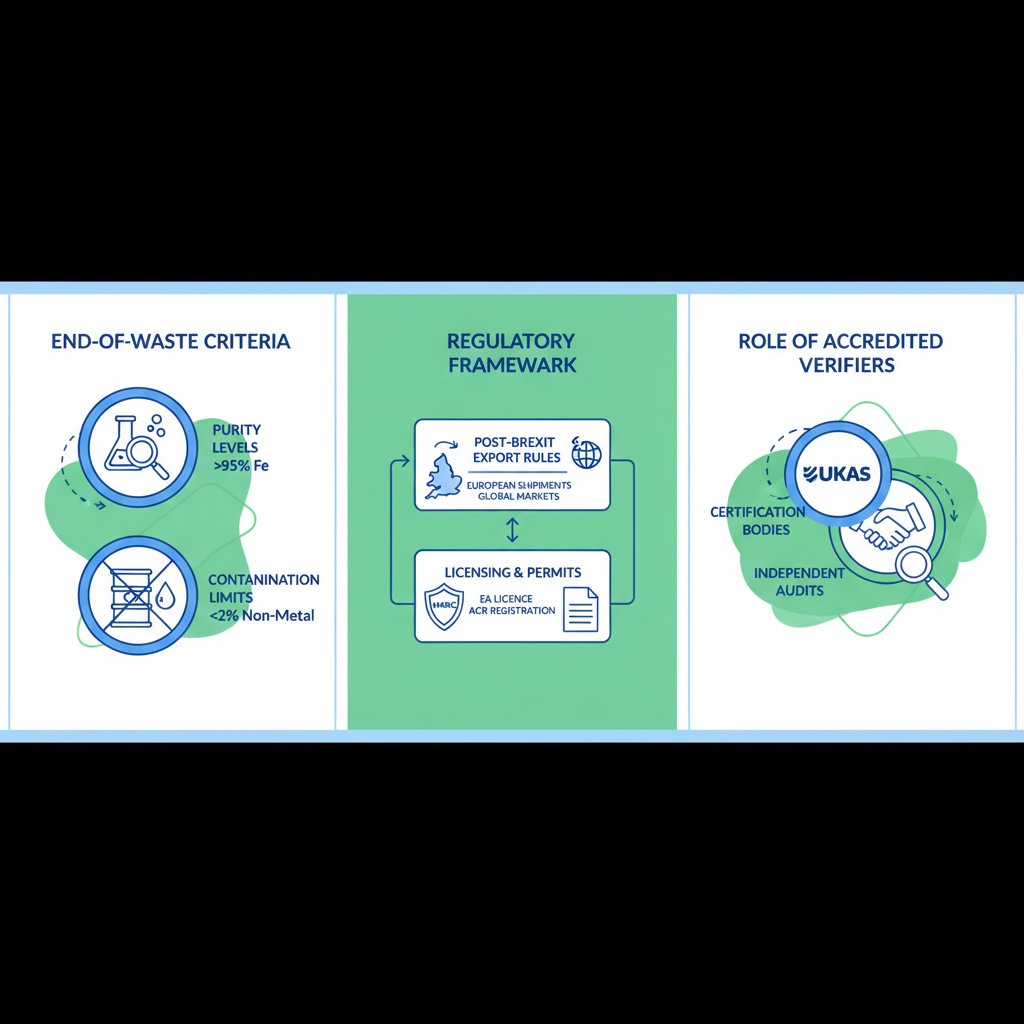
Key standards for metal scrap inspections in the UK
These criteria not only safeguard environmental integrity but also enhance recycling efficiency by guaranteeing high-purity inputs for downstream industries.
Regulatory Framework for UK Exports
The regulatory framework for UK exports governs scrap metal shipments to ensure compliance with environmental and trade laws, emphasizing quality controls to classify materials appropriately. Post-Brexit, the UK has retained much of the EU acquis, including Regulation 333/2011, but adapted procedures through the Waste Shipment Regulation (EU) No 1013/2006 as amended by UK law. This framework mandates notifications, consents, and inspections for transboundary movements, particularly to non-OECD countries.
Applied to metal scrap, the scrap metal export regulations UK require exporters to obtain licenses from the Environment Agency for controlled shipments, verifying adherence to end-of-waste status before export. Purity and contamination limits from Annex I apply, with foreign materials capped at 2% and hazardous substances removed via specified treatments. Exporters must document recovery operations, proving scrap is destined for legitimate recycling facilities. Post-Brexit changes include UK-specific border controls and alignment with the Basel Convention, requiring prior informed consent for hazardous waste exports. Non-compliance can lead to fines up to £50,000 or shipment seizures, underscoring the need for thorough quality assessments.
For instance, UK exporters to Turkey must comply with enhanced documentation under these rules, demonstrating how British ferrous scrap verification integrates with global standards to streamline trade while mitigating risks.
Meeting these regulations unlocks smoother international trade, reducing delays and penalties for compliant exporters.
Role of Accredited Verifiers
Accredited verifiers are independent bodies authorized to assess and certify that scrap metal meets end-of-waste criteria, ensuring regulatory compliance in the UK. Under UKAS accreditation aligned with ISO 17020, these verifiers conduct impartial inspections, drawing from Regulation 333/2011’s emphasis on qualified staff and standardized methods.
In practice, verifiers like approved PSIA agencies perform physical examinations, sampling, and laboratory testing for metal scrap consignments. They grade scrap per industry specs, measure contamination levels (e.g., ≤2% foreign materials), and issue certificates confirming non-waste status. Qualifications include trained personnel with expertise in visual inspections, radioactivity monitoring, and hazardous substance detection, often requiring ongoing training to handle post-Brexit adaptations. Verifiers also review input waste and treatment processes, ensuring only recoverable iron or steel is used, with hazardous elements neutralized beforehand.
UK examples include verifiers at London ports who certify shipments for export, providing documentation for banks and customs. This role is vital for British ferrous scrap verification, as it validates quality for recycling efficiency and avoids penalties like confiscation for substandard loads.
By engaging accredited verifiers, exporters gain reliable assurance, paving the way for benefits such as enhanced market access and cost savings in the recycling chain.
Advantages of Quality Inspection for UK Scrap Exporters
Quality inspection services play a pivotal role in the success of UK-based exporters dealing in metal scrap. By conducting thorough pre-shipment checks, businesses can unlock significant advantages that safeguard operations and boost profitability. This section delves into key benefits, from regulatory adherence to enhanced global positioning.
Ensuring Regulatory Compliance and Avoiding Penalties
In the realm of metal scrap quality inspection in the UK, ensuring regulatory compliance stands as a cornerstone benefit for exporters. Post-Brexit, navigating scrap metal export regulations UK has become more intricate, with stringent rules on waste shipments to prevent environmental harm and illegal trade. Quality inspections verify that consignments meet these standards, issuing Pre-Shipment Inspection Certificates (PSIC) that confirm the absence of hazardous materials.
Evidence from Gov.uk guidance highlights the severe consequences of non-compliance: fines can reach £50,000 per offense, and repeated violations may lead to imprisonment or business shutdowns. For instance, an exporter shipping untreated scrap to the EU without proper certification could face customs holds and hefty penalties, disrupting cash flow and reputation. Hypothetical scenario: A London-based firm avoids a £20,000 fine by obtaining PSIC, allowing seamless clearance at ports like Felixstowe.
- Potential risks avoided: Customs seizures, legal battles, and loss of export licenses.
To maximize this perk, exporters should schedule inspections early in the loading process, aligning with UK waste export protocols for smooth operations.
Enhancing Market Access and Buyer Confidence
Quality inspection elevates market access for UK scrap exporters by fostering buyer confidence through verifiable standards. International buyers, particularly in Asia and Europe, demand proof of quality to mitigate risks in volatile commodity markets. PSIC issuance acts as a trusted endorsement, demonstrating adherence to global waste shipment rules and opening doors to premium trade lanes.
Drawing from Gov.uk insights on exporting waste, certification aligns with Basel Convention requirements, enabling access to restricted markets that prioritize clean, non-hazardous scrap. This builds trust: buyers are 30% more likely to proceed with deals backed by independent verification, reducing negotiation times and disputes. Consider a Manchester exporter securing a long-term contract with an Indian steel mill after PSIC confirmed high-purity ferrous scrap, boosting annual revenues by 25%.
UK scrap verification perks extend to smoother banking processes, as certificates support documentary compliance for letters of credit. Exporters gain a competitive edge in post-Brexit landscapes, where British export quality gains differentiate reliable suppliers from others.
Tip: Partner with DGFT-approved agencies to streamline certification, ensuring timely market entry.
Promoting Sustainable Recycling Practices
Quality inspection promotes sustainable recycling practices, aligning UK exporters with environmental goals and economic efficiencies. By verifying scrap purity, inspections facilitate achievement of end-of-waste criteria for scrap metal, transforming waste into valuable resources under EU-derived UK regulations. This status unlocks incentives like reduced landfill taxes and eligibility for green financing.
Gov.uk documentation emphasizes how compliant exports support circular economies, minimizing pollution from improper disposal. For example, inspections detect contaminants early, preventing environmental penalties and enhancing recycling yields–potentially increasing metal recovery rates by 15%. A hypothetical Birmingham exporter, through rigorous checks, achieves end-of-waste certification, reducing carbon emissions equivalent to planting 500 trees annually and attracting eco-conscious buyers.
- Risks avoided: Ecological fines, supply chain backlash, and inefficient processing costs.
British export quality gains here include stronger ESG profiles, appealing to investors focused on sustainability. Exporters should integrate testing for heavy metals to fully leverage these benefits, paving the way for greener operations.
The Pre-Shipment Inspection Process for Metal Scrap
Exporting metal scrap from the UK demands rigorous pre-shipment quality checks to meet global standards and avoid penalties. The Metal Scrap Quality Inspection in the UK ensures consignments comply with environmental and trade requirements, safeguarding buyers and ecosystems. This process unfolds in three key phases: preparation, on-site testing, and certification. Exporters follow these steps to streamline shipments from ports like Felixstowe, aligning with evolving regulations including 2025 updates on waste categorization.
Preparation and Documentation Steps
Begin the pre-shipment inspection by gathering essential documentation and securing permits. Exporters must obtain an export license from the Environment Agency, verifying adherence to scrap metal export regulations UK. This involves submitting details on scrap origin, volume, and destination, often taking 2-4 weeks for approval. Prepare a bill of lading, commercial invoice, and packing list, all cross-referenced with the shipment’s composition report.
Tools for this phase include digital permit portals and compliance software to track submissions. The Environment Agency’s guidance outlines fixed charges, such as £1,200 for standard waste export applications, with time-based fees up to £100 per hour for complex reviews.
To optimize, consult certified agents early; double-check forms for accuracy to prevent delays. Maintain records digitally for quick audits.
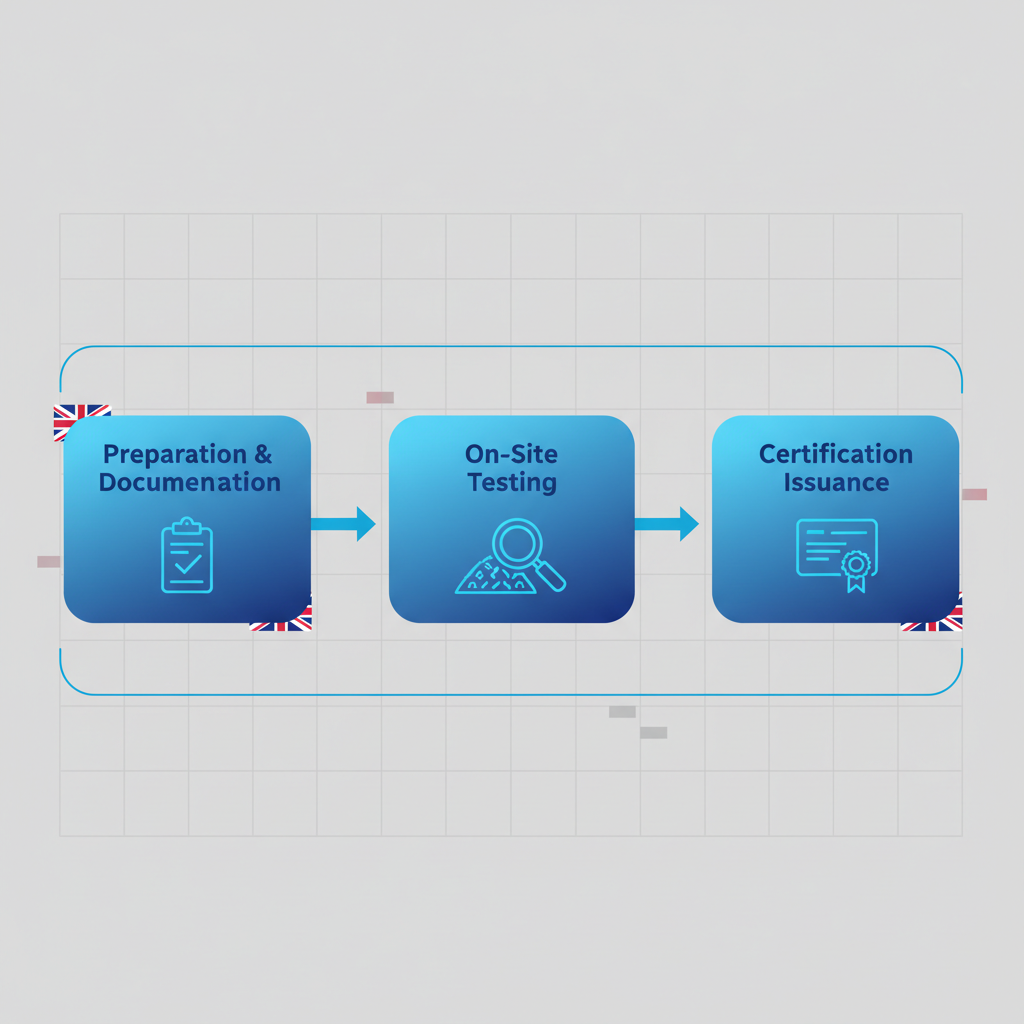
Pre-shipment inspection process for UK metal scrap exports
This foundational stage sets the tone for seamless port operations, where physical verification builds on documented claims. Transitioning to the dockside, teams apply hands-on methods to validate quality.
On-Site Testing and Analysis at Ports
At UK ports, inspectors conduct UK port scrap evaluation through visual and physical assessments. Teams arrive within 24 hours of vessel docking, starting with pre-export metal checks to identify visible contaminants like oils or non-metallics. Sampling follows stratified methods: divide the consignment into lots, extract representative portions using grabbers or augers for analysis.
Lab tests target composition, employing XRF spectrometers for alloy verification and assays for purity levels. Contaminant scans ensure levels below 0.5% for hazardous materials, aligning with end-of-waste criteria for scrap metal under EU Regulation 333/2011, which categorizes clean ferrous and non-ferrous scraps as non-waste.
Prioritize chain-of-custody logs during sampling; wear PPE for safety. These protocols confirm shipment integrity before loading.
Certification Issuance and Compliance Checks
Final verification consolidates findings into the Pre-Shipment Inspection Certificate (PSIC). Inspectors review tests against Basel Convention rules, ensuring amber-listed scraps receive prior informed consent for non-OECD destinations. Compliance checks cross-reference documentation, flagging discrepancies within 48 hours.
Issuance involves digital stamping and blockchain-secured delivery to banks and customs, typically completed in 4-6 hours post-analysis. EU 333/2011 criteria confirm when metal ceases to be waste, facilitating smoother exports amid 2025 policies tightening radiation thresholds.
Engage third-party verifiers for unbiased results; archive certificates for five years. This closes the loop, enabling secure global trade.
Best Practices for Effective Metal Scrap Quality Inspection in the UK
Conducting thorough metal scrap quality inspections is essential for UK exporters to ensure compliance and market access. This section outlines key strategies for selecting reliable agencies, managing costs and timing, and navigating regulatory changes. By following these practices, businesses can streamline operations and reduce risks associated with international trade.
Selecting Accredited Inspection Agencies
Choosing the right inspection agency is crucial for maintaining the integrity of metal scrap exports from the UK. Accredited providers, such as those approved by the Directorate General of Foreign Trade (DGFT), ensure adherence to international standards outlined in EU Regulation 2011/333 Annex I. These agencies employ qualified staff to grade scrap, monitor foreign materials, and verify radioactivity levels, safeguarding against contamination issues. For optimized UK scrap audits, prioritize firms with proven experience in London ports to facilitate efficient British waste checks.
To select an effective agency, follow these steps:
- Verify DGFT approval and UKAS accreditation through official registries.
- Review past performance data, including compliance rates and inspection turnaround times.
- Request references from similar exporters to gauge reliability and service quality.
- Assess technical capabilities, such as sampling methods and laboratory testing for end-of-waste compliance.
Common pitfalls include overlooking accreditation details, leading to rejected consignments, or selecting low-cost options without expertise, resulting in inaccurate certifications. Always prioritize quality over savings to avoid costly delays.
Cost Management and Timing Strategies
Effective budgeting for metal scrap quality inspections involves understanding fee structures from environmental permitting guidance, which includes fixed charges for standard applications and time-and-materials fees for complex tests. Costs typically range from £500 to £2,000 per consignment, depending on volume, testing scope, and location, with higher rates for hazardous material screening. Proper timing aligns inspections with export schedules to minimize port delays and storage fees.
Implement these strategies for cost control and scheduling:
- Estimate costs early by factoring in scrap volume, required tests like radioactivity checks, and agency rates.
- Negotiate bundled services for multiple consignments to achieve volume discounts.
- Schedule inspections 7-10 days before loading to allow for corrections and certification issuance.
- Use digital tracking tools to monitor timelines and avoid overtime charges from rushed processes.
Avoid underestimating variable fees, which can inflate budgets by 20-30%, or delaying bookings during peak seasons, causing shipment backups and additional demurrage costs.
Compliance with Post-Brexit and 2025 Updates
Adapting to post-Brexit requirements and 2025 policy updates is vital for scrap metal export regulations UK, focusing on enhanced documentation and traceability. Exporters must secure updated licenses and ensure scrap meets end-of-waste criteria for scrap metal, including limits on foreign materials and hazardous substances per Annex I standards. Recent shifts emphasize stricter border controls and sustainability reporting to align with global environmental goals.
To stay compliant, adopt these practices:
- Update export licenses annually to reflect post-Brexit trade agreements and 2025 amendments.
- Conduct proactive audits against end-of-waste criteria, verifying no excessive oils or sealed containers.
- Train staff on new declaration forms for customs, incorporating radioactivity certificates.
- Partner with legal consultants for interpreting policy changes and filing appeals if needed.
Pitfalls like ignoring 2025 updates can lead to fines up to £50,000 or export bans, while incomplete documentation often results in customs holds, disrupting supply chains.
Navigating Compliance in UK Metal Scrap Exports
In this UK export quality summary, we’ve explored the essentials of Metal Scrap Quality Inspection in the UK, from regulatory frameworks to practical implementation. Proactive adherence ensures smooth operations in a competitive global market. For exporters, mastering these elements transforms potential challenges into opportunities for reliable trade.
Core requirements include meeting the end-of-waste criteria for scrap metal, which confirms materials are no longer waste but viable products for reuse. This aligns with broader scrap metal export regulations UK, preventing misclassification and ensuring environmental safety. The inspection process–preparation, on-site verification, sampling, and certification–provides a structured path to compliance, while selecting accredited agencies like those offering pre-shipment services minimizes risks and optimizes costs.
Key takeaways for British scrap compliance wrap-up:
- Prioritize end-of-waste testing to avoid export bans and fines.
- Engage certified inspectors early to build buyer confidence and streamline customs clearance.
- Balance thorough quality checks with efficient workflows to control expenses.
- Stay updated on international waste shipment rules via resources like Gov.uk’s guidance on importing and exporting waste.
- View compliance as a strategic advantage for sustainable, long-term exporting success.
Ultimately, committing to rigorous quality practices empowers UK metal scrap exporters to navigate regulations confidently, fostering trust and growth in international markets.