
The Strategic Importance of Ferrous Metal Scrap Inspection in Modern Trade
Ferrous metal scrap sits at the intersection of industrial efficiency, environmental responsibility, and regulatory scrutiny. As steelmakers increasingly rely on scrap as a primary feedstock, international trade volumes have expanded significantly. With this growth comes heightened risk. Scrap is not a uniform commodity; it is a collection of materials gathered from varied and often uncontrolled environments.
Inspection exists to bring order to this variability. Ferrous metal scrap inspection is no longer a procedural step added for formality. It is a structured safeguard designed to prevent safety incidents, environmental violations, and commercial disputes before material crosses international borders.
Key objectives of ferrous scrap inspection include:
- Confirming the declared scrap grade matches the actual material
- Ensuring the absence of hazardous or prohibited substances
- Verifying compliance with importing country regulations
- Protecting downstream recycling facilities and personnel
When these objectives are met, inspection becomes a value-preserving function rather than a cost center. It ensures that scrap remains a legitimate industrial resource rather than a regulatory liability.
Defining Ferrous Metal Scrap and Its Trade Characteristics
Ferrous metal scrap refers to recyclable materials primarily composed of iron and steel. These materials are magnetic and are widely reused due to their high recovery efficiency and established recycling infrastructure. However, the simplicity of the definition masks the complexity of the material itself.
Ferrous scrap originates from diverse sources, each contributing different risk profiles. Scrap from demolition sites differs significantly from industrial offcuts or end-of-life machinery. This diversity makes classification and inspection essential.
- Variations in size, density, and form
- Mixed sourcing from industrial, commercial, and municipal streams
- Presence of residual coatings, oils, or attachments
- Inconsistent processing levels prior to export
Inspection ensures that these characteristics remain within acceptable boundaries defined by contracts and regulations. Without verification, discrepancies can easily lead to disputes or rejections at destination ports.
Classification of Ferrous Scrap and Why It Matters
Scrap classification is the foundation upon which inspection is built. International trade relies on recognized scrap categories to establish expectations regarding quality, processing, and contamination tolerance.
The most commonly traded ferrous scrap categories include:
- Heavy Melting Scrap (HMS 1 and HMS 2), typically derived from thick steel sections
- Shredded scrap, produced through mechanical shredding of mixed steel products
- Cast iron scrap, often sourced from automotive and industrial components
- Structural steel scrap, originating from beams, plates, and construction materials
- Turnings and borings, generated as machining by-products
Each category carries implicit assumptions regarding size limits, cleanliness, and recyclability. Inspection verifies that exporters adhere to these assumptions. Misclassification, whether accidental or deliberate, is one of the most common causes of scrap trade disputes.
Purpose and Scope of Ferrous Metal Scrap Inspection
The scope of ferrous metal scrap inspection extends beyond visual confirmation. It is a comprehensive evaluation designed to assess safety, legality, and contractual conformity.
At its core, inspection seeks to answer three critical questions:
- Is the material safe to transport and recycle?
- Does the shipment comply with importing country laws?
- Does the consignment meet the agreed commercial specifications?
To answer these questions, inspectors examine both physical attributes and hidden risks. The inspection process culminates in formal documentation—typically a Scrap Inspection Certificate or Pre-Shipment Inspection Certificate (PSIC)—which serves as evidence of compliance for customs authorities.
Safety Risks Inherent in Ferrous Scrap Shipments
Ferrous scrap is not inherently dangerous, but its uncontrolled sourcing introduces risks that cannot be ignored. These risks are the primary reason inspection has become mandatory in many jurisdictions.
The most significant safety risks include:
- Radiation contamination from medical or industrial equipment
- Pressurized containers concealed within scrap loads
- Explosive or flammable residues
- Sharp or unstable components posing handling hazards
Inspection identifies these risks at origin, where corrective action is still possible. Once scrap reaches a port or recycling facility, the consequences of oversight multiply exponentially.
Radiation Control as a Cornerstone of Scrap Inspection
Radiation incidents in the scrap industry have shaped modern inspection protocols. Even trace radioactive sources can contaminate entire facilities, leading to prolonged shutdowns and costly remediation.
Radiation screening during ferrous scrap inspection typically involves:
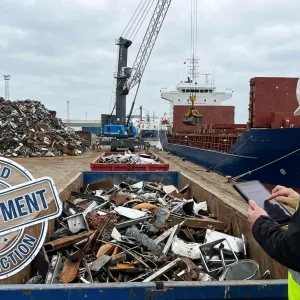
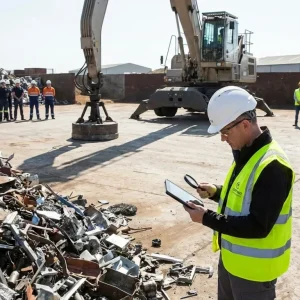
- Scanning scrap piles using calibrated handheld detectors
- Monitoring background radiation levels during inspection
- Re-scanning containers prior to sealing and dispatch
These steps ensure that scrap shipments do not pose invisible threats. Radiation control has become a non-negotiable expectation in international scrap trade, particularly for imports into regulated markets.
Managing Contamination in Ferrous Scrap Consignments
Contamination directly affects recycling efficiency, emissions, and furnace integrity. Regulators therefore impose strict contamination thresholds for ferrous scrap imports.
Inspectors routinely assess for:
- Plastics, rubber, and insulation materials
- Wood, paper, and packaging waste
- Oils, greases, and chemical residues
- Electronic components or wiring
Inspection does not require absolute purity, but it enforces reasonable limits. By controlling contamination at source, inspection supports cleaner recycling processes and reduces downstream waste generation.
Regulatory Framework Governing Ferrous Scrap Trade
Ferrous scrap is regulated as an environmentally sensitive commodity in many countries. Importing authorities require assurance that scrap shipments do not serve as disguised waste imports.
Regulatory oversight typically focuses on:
- Environmental protection laws
- Waste management regulations
- Customs and port safety requirements
- Public health considerations
Inspection bridges the gap between exporters and regulators by translating regulatory expectations into verifiable inspection criteria.
Pre-Shipment Inspection Process for Ferrous Scrap
A structured inspection process ensures consistency, transparency, and credibility. Professional inspection agencies follow standardized workflows to eliminate ambiguity.
Documentation and Contract Review
Inspection begins with a review of:
- Sales contracts and purchase orders
- Declared scrap grades and quantities
- Importing country regulatory requirements
This step defines the inspection scope and acceptance criteria.
Physical and Visual Examination
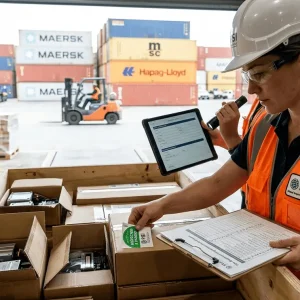
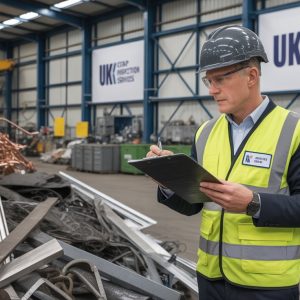
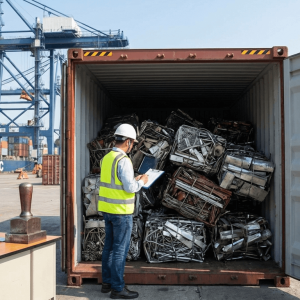
Inspectors conduct a thorough visual assessment of the scrap material to confirm conformity.
Key aspects evaluated include:
- Scrap size and physical form
- Segregation of grades
- Presence of visible prohibited items
This examination establishes baseline compliance.
Radiation Screening and Safety Checks
Radiation screening follows visual inspection and is conducted methodically across the consignment. Any abnormal readings trigger immediate escalation and suspension of certification.
Loading Supervision and Container Verification
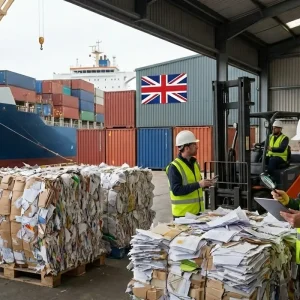
Where required, inspectors supervise loading to prevent substitution or contamination after inspection.
Checks include:
- Verification of container cleanliness
- Monitoring of loading practices
- Recording of container and seal numbers
This step preserves inspection integrity through shipment dispatch.
Reporting and Certification
Inspection findings are documented in detailed reports supported by photographs. Upon compliance, the inspection agency issues the relevant certification required for customs clearance.
Prohibited Materials and Zero-Tolerance Items
Importing countries maintain strict lists of prohibited materials to protect safety and environmental integrity.
Common zero-tolerance items include:
- Radioactive substances
- Medical and biological waste
- Explosives or ammunition
- Sealed or pressurized containers
Inspection ensures these items are absent before shipment authorization.
Commercial Value of Inspection for Importers and Exporters
Beyond compliance, inspection delivers tangible commercial benefits. For exporters, certification reduces payment delays and dispute risk. For importers, it ensures predictable input quality and regulatory confidence.
In many contracts, inspection certificates are directly linked to:
- Letters of credit
- Payment milestones
- Insurance coverage
Inspection thus functions as a commercial risk-management tool.
DGFT Requirements for Ferrous Scrap Imports into India
India mandates pre-shipment inspection for ferrous scrap imports. Shipments must be certified by a DGFT-approved inspection agency, and a valid PSIC must accompany shipping documents.
Failure to comply may result in:
- Cargo rejection at port
- Financial penalties
- Suspension of import privileges
This regulatory environment underscores the importance of selecting an authorized inspection partner.
Role of Third-Party Inspection Agencies in Scrap Trade
Third-party inspection agencies act as neutral arbiters between buyers, sellers, and regulators. Their independence lends credibility to inspection findings and ensures acceptance by customs authorities.
Their responsibilities include:
- Objective assessment of compliance
- Accurate documentation and reporting
- Regulatory interpretation across jurisdictions
Trust in the inspection agency directly influences trade continuity.
Why MELT Enterprise Ltd Is a Preferred Inspection Partner
MELT Enterprise Ltd is a DGFT-approved Pre-Shipment Inspection Agency headquartered in the UK, with authorization across Europe, the Americas, Africa, the Middle East, and Asia-Pacific.
Its inspection approach blends traditional discipline with modern regulatory awareness, ensuring shipments meet both legacy standards and evolving compliance expectations.
Environmental Responsibility and the Circular Economy
Ferrous scrap inspection supports environmental sustainability by ensuring scrap remains a recyclable resource. By preventing contaminated or hazardous shipments, inspection protects ecosystems and reinforces responsible trade practices.
Long-Term Outlook for Ferrous Metal Scrap Inspection
While inspection technologies continue to evolve, the fundamentals remain unchanged. Thorough verification at source will always outperform corrective action at destination.
Experience, consistency, and regulatory knowledge will continue to define trusted inspection agencies in global scrap trade.
Concluding Perspective
Ferrous metal scrap inspection is not an administrative hurdle. It is a discipline grounded in safety, accountability, and trust. For companies engaged in international scrap trade, inspection remains the strongest safeguard against operational, regulatory, and reputational risk.