
Setting the Standard for Independent Compliance
The United Kingdom has long maintained a reputation for regulatory discipline, structured trade governance, and high industrial standards. In such an environment, third party inspection services in the UK have evolved into a cornerstone of compliant global commerce.
Independent inspection is no longer a supplementary safeguard—it is a strategic necessity. As international supply chains expand and regulatory expectations tighten, exporters and importers increasingly rely on third party inspection services to ensure goods meet contractual, safety, and environmental requirements before crossing borders.
In sectors such as scrap trade, industrial equipment, and recyclable commodities, third party inspection provides more than verification. It offers assurance. It protects commercial interests. It reduces regulatory exposure. And it builds trust between trading partners who may never meet face to face.
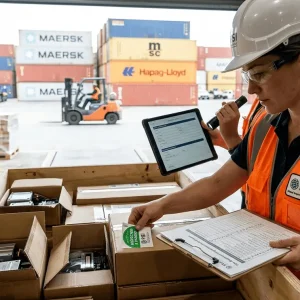
In practical terms, third party inspection in the UK involves an independent organization evaluating goods prior to shipment or at defined checkpoints in the supply chain. These evaluations confirm that products align with:
- Contractual specifications
- Export regulations
- Import country laws
- Environmental and safety standards
The outcome is documented evidence—inspection reports, certificates, and compliance confirmations—that customs authorities and buyers rely upon during clearance and acceptance.
In a marketplace where reputations are built on reliability, independent inspection stands as a defining element of responsible trade.
Industries Covered by Third Party Inspection Services in the UK
Third party inspection services in the UK operate across a wide spectrum of industries. While methodologies may differ by sector, the underlying objective remains constant: objective verification.
1. Scrap and Recycling Industry
The scrap sector represents one of the most inspection-sensitive industries. Scrap materials are inherently variable. They may contain contamination, mixed grades, or prohibited components. Inspection services verify:
- Scrap grade accuracy
- Segregation and cleanliness
- Absence of hazardous materials
- Radiation screening compliance
Given the strict import regulations enforced by countries such as India, Indonesia, and parts of Africa, independent verification is often mandatory.
2. Manufacturing and Engineering
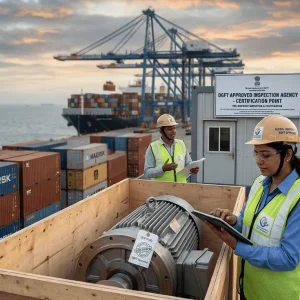
Industrial equipment, fabricated components, and machinery exports often require inspection to confirm:
- Dimensional compliance
- Material composition
- Workmanship quality
- Packaging standards
Third party inspection prevents costly rejections and reinforces supplier credibility.
3. Oil, Gas, and Energy
Energy infrastructure components demand rigorous oversight. Inspections assess:
- Structural integrity
- Material certifications
- Welding compliance
- Pressure testing documentation
Given the safety-critical nature of this sector, independent verification is widely accepted as industry best practice.
4. Consumer Goods and Retail
Retail supply chains use inspection to ensure consistency in:
- Product labeling
- Packaging accuracy
- Quantity verification
- Regulatory labeling compliance
Inspection protects brand reputation while minimizing disputes between buyers and suppliers.
5. Recycling and Environmental Commodities
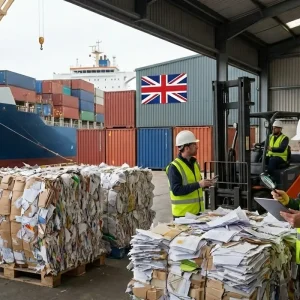
Paper scrap, plastic scrap, and secondary raw materials are subject to environmental scrutiny. Inspection ensures:
- Acceptable contamination levels
- Proper classification
- Compliance with waste shipment regulations
Across these industries, one principle remains constant: independence ensures credibility.
Scrap Inspection Scope
In the UK, scrap inspection forms a substantial portion of third party inspection services. Scrap trade presents unique risks due to the heterogeneous nature of materials and the regulatory oversight applied by importing countries.
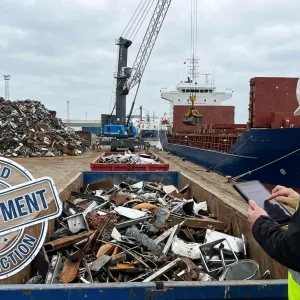
Physical Inspection of Scrap
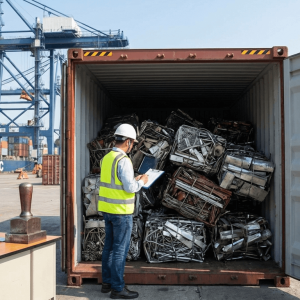
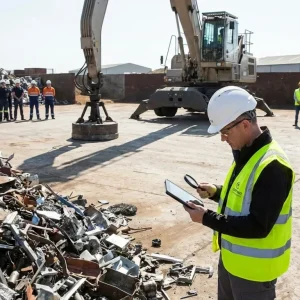
Inspectors conduct on-site evaluations at scrapyards, warehouses, or container loading points. This includes:
- Visual verification of declared scrap type
- Manual checks of segregation
- Identification of foreign materials
This stage confirms that the consignment aligns with contractual agreements.
Contamination Assessment
Contamination remains one of the leading causes of shipment rejection. Inspectors assess:
- Plastics, rubber, wood content
- Oils and grease residues
- Municipal or medical waste
- Non-metallic inclusions
Strict importing countries impose defined contamination thresholds, and inspection ensures compliance before shipment.
Radiation Screening
For metal scrap exports, radiation screening is essential. Using calibrated detection equipment, inspectors verify that materials are free from radioactive sources.
Loading Supervision and Sealing
Container loading supervision prevents post-inspection tampering. Inspectors verify:
- Quantity and weight
- Proper distribution
- Seal application and recording
Seal numbers are documented in inspection reports to maintain cargo integrity during transit.
Documentation and Certification
After inspection, formal documentation is issued, including:
- Scrap Inspection Certificate
- Pre-Shipment Inspection Certificate (PSIC)
- Photographic evidence
This documentation supports customs clearance and demonstrates compliance to buyers.
Scrap inspection is not a superficial check. It is a structured, evidence-based compliance exercise designed to protect all stakeholders.
International Acceptance of UK Third Party Inspection
One of the defining strengths of third party inspection services in the UK is their international acceptance.
UK-based inspection agencies are widely recognized due to:
- Regulatory discipline
- Experienced inspectors
- Structured reporting methodologies
- Alignment with global compliance frameworks
Customs authorities in many importing countries accept UK-issued inspection certificates with minimal challenge, particularly when aligned with recognized frameworks such as PSIC or DGFT requirements.
Why International Acceptance Matters
- Reduces duplicate inspections at destination ports
- Minimizes clearance delays
- Enhances buyer confidence
- Lowers demurrage and storage costs
Exporters operating across Europe, Asia, Africa, and the Middle East benefit from consistent standards applied at origin.
Geo-focused service coverage further strengthens this acceptance. For exporters serving multiple regions, access to:
- Third Party Inspection Services Europe
- Third Party Inspection Services Middle East
- Third Party Inspection Services Asia
- Third Party Inspection Services Africa
ensures consistent oversight regardless of destination.
International recognition transforms inspection from a regulatory formality into a trade facilitator.
Third Party Inspection for International Trade Compliance
Why Global Trade Needs Inspection
Global trade today operates under unprecedented regulatory scrutiny. Environmental protection laws, customs enforcement measures, and safety standards have intensified across jurisdictions.
Self-declaration alone is rarely sufficient in regulated sectors. Authorities demand independent verification to mitigate risks such as:
- Misdeclaration of goods
- Environmental violations
- Security threats
- Revenue leakage
Third party inspection bridges the gap between commercial representation and regulatory assurance.
By verifying goods prior to shipment, inspection reduces the burden on customs authorities while enabling compliant trade flow.
- Misdeclaration of goods
Inspection vs Self-Declaration
Many exporters believe that internal quality checks are sufficient. While internal controls are essential, they lack independence.
Limitations of Self-Declaration
- Perceived bias
- Limited credibility with customs
- Increased likelihood of port inspections
- Heightened dispute risk
In contrast, third party inspection provides:
- Neutral verification
- Documented compliance trail
- Objective reporting
- Recognized certification
The difference is not merely procedural—it is reputational.
Buyers and regulators trust independently verified shipments. That trust directly impacts clearance speed, payment cycles, and long-term trade relationships.
Compliance Benefits of Third Party Inspection
Third party inspection delivers measurable compliance benefits across multiple dimensions.
1. Regulatory Protection
Independent verification reduces the risk of:
- Shipment rejection
- Customs penalties
- License suspension
- Blacklisting
2. Commercial Risk Mitigation
Inspection prevents disputes by confirming:
- Correct grades
- Accurate quantities
- Proper packaging
- Compliance with contractual terms
3. Customs Clearance Efficiency
With credible inspection certificates:
- Port-level inspections decrease
- Clearance timelines shorten
- Storage and demurrage costs reduce
4. Environmental Responsibility
Inspection ensures scrap and recyclable materials are:
- Free from prohibited waste
- Properly segregated
- Suitable for recycling
This protects both the importing country and the global environment.
5. Strengthened Buyer Confidence
Buyers prefer working with suppliers who invest in independent oversight. Over time, this builds trading stability and long-term contracts.
Inspection becomes not just a compliance requirement, but a competitive advantage.
The Role of Third Party Inspection in Import Export Scrap Inspection
Import export scrap inspection stands as one of the most compliance-driven sectors in global trade.
Independent inspection agencies support scrap exporters by:
- Aligning with importing country regulations
- Issuing PSIC certificates where required
- Ensuring DGFT-compliant processes for India-bound cargo
- Supporting customs documentation
Cross-linking with Import Export Scrap Inspection reinforces how third party inspection integrates into broader trade compliance structures.
Without independent verification, scrap exporters face significant operational risk. With it, they operate with confidence and predictability.
The Future of Third Party Inspection Services in the UK
While technologies evolve, the core principles of inspection remain rooted in structured verification.
Emerging trends include:
- Digital inspection reporting
- Real-time photo documentation
- Electronic certificate validation
- Integrated compliance platforms
However, the human element remains essential. Experienced inspectors, regulatory knowledge, and practical judgment continue to define effective inspection.
Tradition in inspection exists for a reason. Proven processes protect trade from avoidable disruption.
Final Perspective
Third party inspection services in the UK represent more than a procedural requirement—they embody accountability in global commerce.
Across scrap trade, industrial manufacturing, energy, and recycling sectors, independent verification ensures goods move legally, safely, and efficiently across borders.
In a regulatory landscape defined by scrutiny and environmental awareness, third party inspection provides:
- Compliance assurance
- Commercial protection
- International credibility
- Sustainable trade continuity
For exporters and importers operating in today’s interconnected markets, third party inspection is not optional. It is the foundation upon which reliable global trade is built.
Choosing independent inspection today prevents complications tomorrow—and safeguards the integrity of international commerce for years to come.