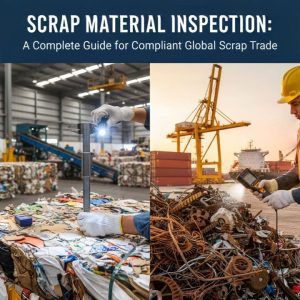

Scrap Inspection Services for Exporters: A Complete Compliance Guide
For exporters operating in the global scrap trade, inspection is no longer a procedural formality—it is a commercial safeguard, regulatory requirement, and reputational shield. Whether exporting metal scrap, paper scrap, or recyclable industrial waste, exporters today operate under heightened scrutiny from customs authorities, environmental regulators, and importing governments.
Scrap inspection services exist to protect exporters from shipment rejection, penalties, delays, and blacklisting, while ensuring that consignments meet the safety, environmental, and legal expectations of destination countries. In markets like India, Africa, Southeast Asia, and parts of South America, pre-shipment inspection conducted by an approved third-party agency is mandatory, not optional.
This guide explains why exporters need scrap inspection services, where compliance failures commonly occur, how pre-shipment inspection reduces risk, and how choosing the right inspection agency can determine whether a shipment clears smoothly—or becomes a costly liability.
Why Exporters Need Scrap Inspection
Exporters are often the first point of accountability in the scrap supply chain. When something goes wrong—contamination, mis-declaration, hazardous material discovery—it is the exporter who faces the immediate consequences.
Scrap Is Classified as High-Risk Cargo
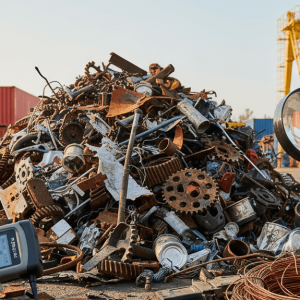
Unlike finished goods, scrap materials are:
- Heterogeneous in nature
- Prone to contamination
- Difficult to visually standardize
- Susceptible to concealment of prohibited items
Because of this, customs authorities treat scrap shipments as high-risk consignments, subject to stricter checks than most other cargo categories.
Regulatory Pressure Is Increasing
Countries importing scrap—particularly developing economies—have faced:
- Environmental damage from waste dumping
- Safety incidents at ports and recycling yards
- Radiation exposure from contaminated metal scrap
As a result, regulators have tightened controls, requiring exporters to provide independent inspection certification before shipment.
For exporters shipping to India, for example, the DGFT mandates Pre-Shipment Inspection Certification (PSIC) issued only by DGFT-approved inspection agencies.
Related reading: Pre-Shipment Inspection Services
Exporter Liability Does Not End at Loading
A common misconception among exporters is that responsibility ends once the container is sealed and loaded. In reality:
- Customs authorities trace violations back to the exporter
- Rejected cargo may be returned at exporter’s cost
- Repeat non-compliance can result in trade restrictions
Scrap inspection services protect exporters from these downstream liabilities by ensuring compliance before the vessel sails.
Common Export Compliance Failures
Despite good intentions, many exporters fail inspection due to avoidable mistakes. Understanding these failure points is critical to preventing shipment disruption.
1. Mis-Declaration of Scrap Grade
Declaring scrap as a higher-quality grade than what is actually loaded is one of the most common causes of rejection. Even minor deviations—excess attachments, mixed materials, or inconsistent sizing—can trigger non-compliance.
Inspection services verify that:
- The declared grade matches physical reality
- Scrap conforms to recognized trade standards
- Consistency exists across containers
2. Presence of Prohibited or Hazardous Materials
Customs authorities routinely reject scrap shipments containing:
- Sealed containers or pressure vessels
- Batteries and e-waste
- Medical or municipal waste
- Explosives or ammunition remnants
Exporters may not always be aware of these materials if sourcing scrap from multiple suppliers. Independent inspection acts as a final safety filter.
3. Radiation Contamination
Radiation is one of the most serious risks associated with metal scrap exports. Even trace radioactive material can:
- Shut down port operations
- Lead to long-term storage or destruction of cargo
- Trigger international reporting obligations
Professional scrap inspection services include mandatory radiation detection, ensuring shipments are safe for handling and recycling.
4. Incomplete or Incorrect Documentation
Documentation errors often invalidate otherwise compliant shipments. Common issues include:
- Mismatch between invoice and packing list
- Incorrect container numbers
- Missing exporter or importer authorization
- Improper certificate formats
Inspection agencies review documentation alongside physical inspection, ensuring consistency and acceptance.
5. Using Non-Approved Inspection Agencies
Perhaps the most costly mistake exporters make is appointing inspection agencies that are not recognized by the importing country. In such cases, even a clean inspection report may be rejected outright.
Related reading: DGFT Approved Inspection Agency
Pre-Shipment Inspection Benefits for Exporters
Pre-shipment inspection is not merely a regulatory obligation—it is a strategic advantage for exporters operating in competitive global markets.
Risk Reduction Before Shipment
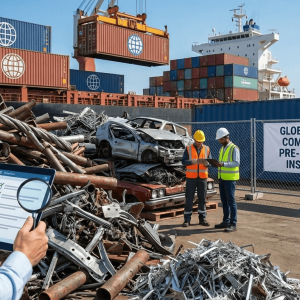
Pre-shipment inspection identifies issues before containers are sealed, allowing exporters to:
- Remove non-compliant material
- Correct declarations
- Repack or re-segregate scrap
- Avoid post-arrival penalties
This proactive approach saves time, money, and reputational damage.
Faster Customs Clearance
Shipments accompanied by recognized inspection certificates:
- Face fewer inspections at destination
- Experience reduced port dwell time
- Are less likely to be detained
Customs authorities trust third-party inspection reports issued by authorized agencies, especially for scrap cargo.
Mandatory Certification Compliance (PSIC)
For exports to India and similar regulated markets, pre-shipment inspection enables issuance of:
- PSIC (Pre-Shipment Inspection Certificate)
- Scrap Inspection Certificates accepted by customs
Without these documents, shipments may be denied entry regardless of physical quality.
Related reading: PSIC Certification
Stronger Buyer Confidence
Buyers increasingly demand inspection certification as part of commercial contracts. Providing inspection-verified shipments:
- Builds trust
- Reduces disputes
- Strengthens long-term trade relationships
Inspection services thus support not only compliance, but also commercial credibility.
Choosing the Right Scrap Inspection Agency
Not all inspection agencies offer the same level of authority, acceptance, or expertise. For exporters, choosing the right partner is as important as preparing the shipment itself.
Regulatory Authorization Is Non-Negotiable
The inspection agency must be:
- Approved by relevant authorities (e.g., DGFT)
- Recognized by customs at destination ports
- Authorized to issue mandatory certificates
Failure here renders the entire inspection meaningless.
Global Operational Capability
Exporters often ship from multiple origins. A reliable inspection agency should be able to:
- Conduct inspections across continents
- Deploy trained inspectors locally
- Understand regional export requirements
This ensures consistency regardless of shipment origin.
Technical Expertise in Scrap Materials
Scrap inspection requires specialized knowledge of:
- Ferrous and non-ferrous metals
- Paper and recyclable waste
- Contamination thresholds
- Radiation and safety risks
General cargo inspectors lack this expertise, increasing compliance risk.
Transparent Reporting & Fast Turnaround
Exporters operate on tight shipping schedules. Inspection agencies must deliver:
- Clear, auditable inspection reports
- Fast certificate issuance
- Responsive coordination with exporters
Delays at the inspection stage often cascade into missed sailings and contractual penalties.
Why Exporters Worldwide Trust MELT Enterprise Ltd
MELT Enterprise Ltd is a DGFT-approved pre-shipment inspection agency, authorized to conduct scrap inspection services across the UK, Europe, USA, Africa, Asia-Pacific, and the Americas.
Key Strengths
- DGFT authorization for PSIC issuance
- Coverage across 50+ countries
- Specialized scrap inspection expertise
- Radiation detection & contamination control
- Global acceptance by customs authorities
For exporters, MELT provides confidence that shipments meet both regulatory and commercial expectations—before they leave port.
Related reading: Scrap Inspection Services
Final Thoughts
Scrap inspection services are no longer a box-ticking exercise for exporters. In today’s regulatory environment, they represent a critical layer of protection against financial loss, legal exposure, and reputational damage.
By identifying risks before shipment, ensuring regulatory compliance, and delivering trusted certification, professional scrap inspection services allow exporters to trade confidently, responsibly, and sustainably across global markets.
For exporters who value continuity, compliance, and credibility, working with an authorized, experienced inspection agency is not just prudent—it is essential.